
Your #1 Local Lawn and
Tree Care Provider614-808-4446
White grubs — the C-shaped larvae of Japanese beetles, June bugs, and European chafers — are one of the most common and destructive lawn pests in Ohio. They feed on grass roots just below the soil surface, and when populations get high enough, they can kill large sections of turf in a matter of weeks.
If your lawn is showing signs of grub damage (brown patches that peel up like carpet, spongy turf, animals digging in the yard), here is how to eliminate them and get your lawn back. For persistent or severe infestations, Cardinal Lawns’ grub control service can help.
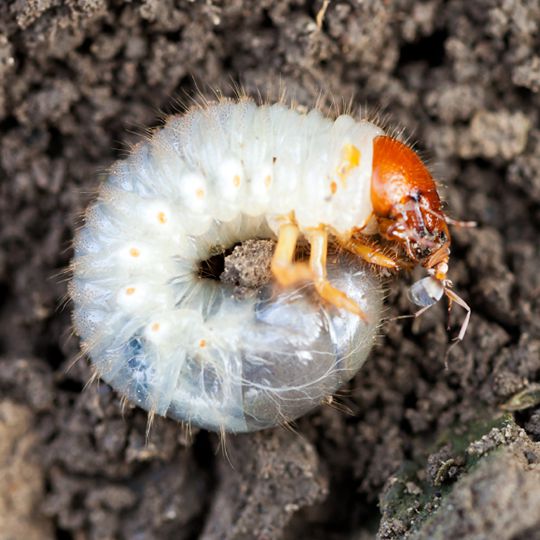
Not every brown patch is grubs. Before treating, cut a 1-foot square of turf about 3 inches deep in a damaged area and peel it back. Count the white, C-shaped grubs you see. Fewer than 5 per square foot is normal and usually does not cause visible damage. If you find 10 or more per square foot, treatment is warranted.
Check Cardinal Lawns’ lawn pest library for photos to confirm what you are seeing are grubs and not other soil-dwelling insects.
Preventive treatment is applied in June or July, before grub eggs hatch. Products containing chlorantraniliprole or imidacloprid create a treated zone in the soil that kills young larvae as they begin feeding. This is the most effective approach — it stops damage before it starts.
Curative treatment is applied after grubs are found and damage is visible, typically in August through October. Products containing trichlorfon or carbaryl work on larger, actively feeding grubs. Curative treatments are less effective than preventive ones because the grubs are larger and more resistant, and damage has already occurred.
Whether preventive or curative, grub products need water to move into the root zone where grubs feed. Apply the product and then irrigate with at least half an inch of water within 24 hours. Without irrigation, the product sits on the surface and never reaches the grubs.
Professional applications are more precisely calibrated and use products not available at retail, which is why professional grub control consistently outperforms DIY treatments in independent trials.
Killing the grubs does not bring dead grass back. Areas where turf peeled away from the soil will need aeration and overseeding to recover. Fall is the ideal time for this — treat the grubs, then overseed 2–3 weeks later once the product has done its work. New grass seedlings establish quickly in fall’s cool temperatures.
Continue your regular fertilization program to support recovery. Healthy, thick turf is also the best long-term defense against future grub damage — dense grass tolerates moderate grub feeding without showing visible damage.
Annual preventive treatment in early summer is the most reliable approach, especially if your property has had grub problems before. Japanese beetles and June bugs lay eggs in the same types of lawns year after year. A single season without preventive treatment can lead to a new infestation.
Maintaining a thick, healthy lawn through regular fertilization, aeration, and proper mowing height also increases grub tolerance. A lawn with a deep root system can sustain moderate grub feeding without showing damage.
When is the best time to treat for grubs?
Preventive: June–July, before eggs hatch. Curative: August–October, when grubs are actively feeding. Preventive treatment is significantly more effective.
Do home remedies work for grubs?
Milky spore and beneficial nematodes have some effect but are inconsistent and slow-acting compared to professional products. They work best as a supplement to, not a replacement for, targeted grub control.
Will grubs come back every year?
If your lawn has had grubs, the beetles that produced them likely laid eggs in nearby yards too. Annual preventive treatment is the most reliable way to avoid recurring damage.
Does Cardinal Lawns treat for grubs?
Yes — Cardinal Lawns offers both preventive and curative grub control for Columbus-area properties. Get your free lawn care quote to start a treatment plan.
Grub damage gets worse fast. If you are seeing brown patches or animals digging in your Columbus lawn, get your free lawn care quote from Cardinal Lawns for a professional assessment.